
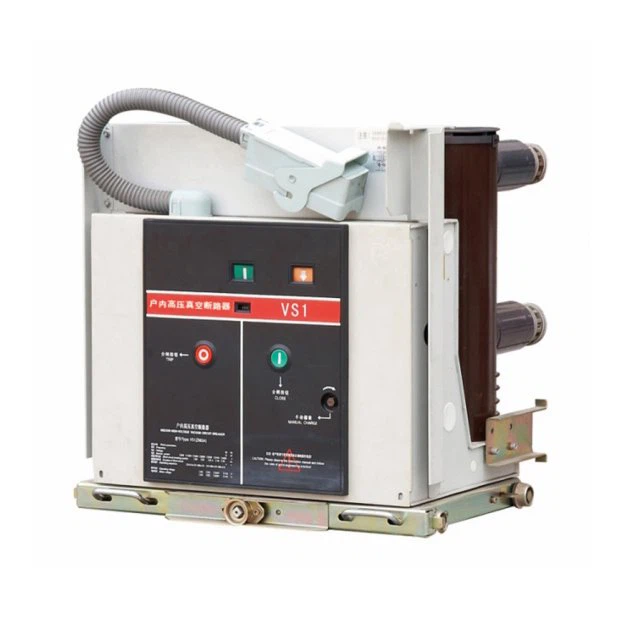
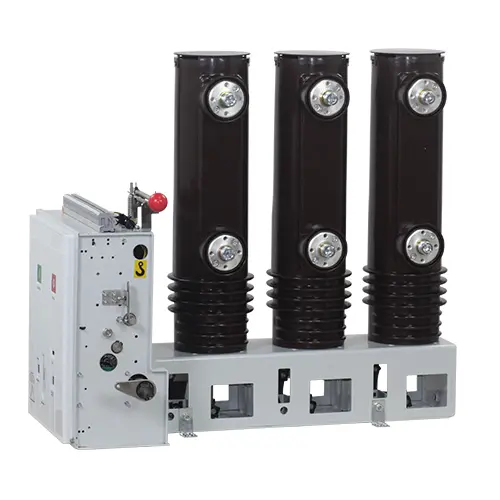
At Enertro, we believe understanding the strengths of each is critical for ensuring the longevity of your switchgear and the safety of your power grid.
1. Assembled Pole Design (The Flexible Standard)
The assembled pole is a traditional structure where the vacuum interrupter is mounted onto an insulating support frame using brackets, rods, and fasteners.
-
-
Key Advantages:
Superior Heat Dissipation: Since the vacuum interrupter is exposed to open air, it benefits from natural convection, making it ideal for high-current applications where temperature rise is a concern.Maintainability & Recyclability: Components can be disassembled and replaced individually. From a sustainability standpoint, the metals and polymers are easier to separate and recycle.Cost-Effective: The manufacturing process is straightforward, leading to lower initial procurement costs.
Limitations:
Environmental Sensitivity: The insulation relies on air gaps, which can be compromised by dust, high humidity, or condensation.
-
2. Embedded Pole Design (The Rugged Performer)
The embedded (or solid-insulated) pole uses APG (Automatic Pressure Gelation) technology to cast the vacuum interrupter and its primary conductive parts directly into high-performance epoxy resin.
-
-
Key Advantages:
Total Environmental Protection: The vacuum interrupter is completely sealed, eliminating risks from dust, salt spray, moisture, or small animals. This makes it the “gold standard” for harsh environments.Compact Footprint: Because epoxy resin has a higher dielectric strength than air, phase-to-phase distances can be reduced, allowing for much smaller switchgear cabinets.Maintenance-Free: The internal components are protected for life, significantly reducing the need for cleaning and routine dielectric inspections.
Limitations:
Non-Repairable: If the pole fails or the interrupter reaches its end of life, the entire pole must be replaced.
-
3. Insulating Tube Design (The Balanced Bridge)
This design places the vacuum interrupter inside a high-strength insulating cylinder (tube), providing a semi-enclosed protective shell.
-
Key Advantages:
Balanced Protection: It offers better physical protection than the open assembled design while maintaining better airflow than a fully embedded pole.High Mechanical Strength: The tube structure provides excellent longitudinal support, enhancing the mechanical stability of the breaker during high-speed switching operations.Cost-Efficiency: It bridges the price gap between the economical assembled pole and the premium embedded pole.
Technical Comparison TableFeatureAssembled PoleEmbedded PoleInsulating TubeDielectric StabilityModerateHighest (Sealed)HighHeat DissipationExcellentModerateGoodSize/CompactnessLargeSmallestMediumMaintenanceComponent-levelFull pole replacementComponent-levelEnvironmental ResistanceLowExceptionalModerate to High
Conclusion: Which Design Should You Choose?
The “best” design depends entirely on your specific application:
-
For Harsh Environments: In coastal areas (salt air), mines (dust), or high-humidity zones, Enertro’s Embedded Poles are the only way to ensure long-term reliability.For High-Current Indoor Use: If you are running high continuous loads in a clean environment, the Assembled Pole offers the best thermal management.For General Industrial Use: The Insulating Tube design remains a robust “all-rounder” for standard distribution where extreme compactness isn’t the primary driver.
As a leading provider in the industry, Enertro offers customized VCB solutions across all three insulation types to match your grid’s specific demands