
A vacuum circuit breaker quotation may list auxiliary contacts without explaining which signals the panel designer can actually use. Before comparing contact quantities, define the meaning of each signal and ask which contacts are available at the supplied terminals.
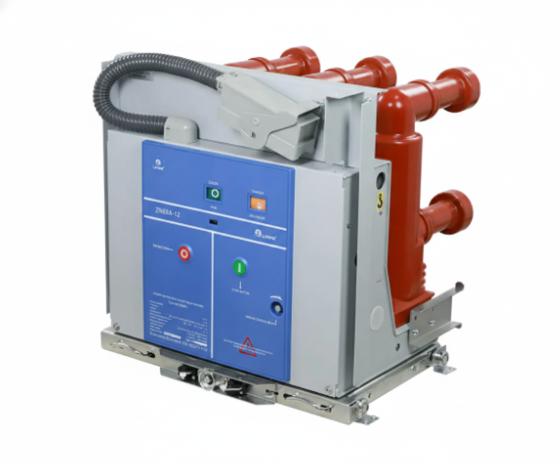
Name the signal before selecting the contact
Breaker open/closed indication, closing-spring condition and withdrawable-truck position answer different questions. Avoid combining them under a single requirement such as “breaker position contacts.”
| Required signal | What to define in the enquiry |
|---|---|
| Breaker open/closed | The indicated breaker state, the operating device and the relevant contact identifiers. |
| Closing spring charged/discharged | The energy-state indication required and the device that provides it. |
| Truck or racking position | The compartment positions distinguished by the offered arrangement, including any positions it cannot distinguish. |
Schneider Electric’s Masterclad documentation distinguishes mechanism-operated contacts from truck-operated contacts. Its published example also shows that a truck-position signal may not distinguish the test/disconnected position from complete withdrawal. These are manufacturer examples, not a description of every Enertro assembly.
An indication contact is not a voltage detector. An open indication alone does not establish that the primary circuit is isolated or de-energized. The signal description must state its intended meaning and limitations.
Read NO and NC against the stated reference condition
“Normally open” and “normally closed” need a defined reference condition. Request the manufacturer’s contact schedule and drawing legend rather than assuming that every NO label means the same breaker, mechanism or truck position.
For each required indication, ask which contact identifier changes state and which state the receiving system should interpret as asserted. Record the corresponding terminal numbers. A model name or a photograph cannot establish this relationship.
Separate installed contacts from available contacts
A total contact count is not necessarily the number offered for external indication. Some contacts may be used within the breaker’s own control arrangement; others may not be brought to the supplied secondary connection. Ask the supplier to identify the fitted contacts, internal allocations and contacts actually available to the project.
Then allocate the available contacts to the agreed indication or supervisory functions. If the required signals exceed the confirmed provision, ask the supplier and panel designer to review the offered configuration. Do not assume that a larger contact block can be substituted without checking its mechanical operation and documentation.
Confirm ratings for the actual secondary circuit
Provide the auxiliary circuit’s voltage, AC or DC supply, connected load and required switching duty. Request the applicable contact ratings and any relevant load limitations for the exact switch configuration. A component being described as suitable for high-voltage switchgear does not establish its secondary-contact circuit ratings.
Ask for the shaft or actuator arrangement, mounting drawing, terminal schedule and the contact-state information needed by the panel designer. Where a particular contact sequence is required, have the manufacturer confirm it for the offered assembly. This article gives no wiring changes, switching procedure or numerical test settings.
Send a defined signal requirement to Enertro
Review the F10 auxiliary switch range or the F10-20III-LB1 product page as enquiry starting points. Ask for written confirmation of the requested function and available contacts; do not infer compatibility from the series name.
The separate VCB control-circuit checklist covers the wider coil, motor and control-package questions. For this enquiry, send the required signals, relevant schematic and terminal requirements through the Enertro contact page.